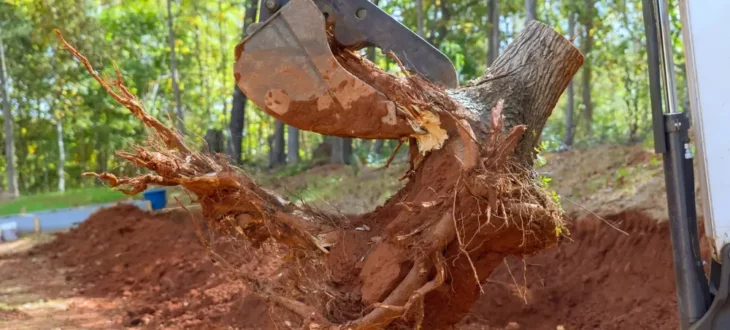
Eco-friendly land clearing explained
Eco-friendly land clearing means selecting methods to clear land that cause less damage to the globe. It’s about being smart, like foregoing chemicals and big machines that tear up the earth, pollute the air and harm local wildlife. For most folks these days, they seek solutions that prioritize the well-being of the soil and the region’s ecosystem. Stump grinding is one of these options and provides a method of land clearing that is both efficient and more environmentally conscious.
Manual tools or solar-powered machines reduce carbon emissions. Manual methods, like hand pulling brush or non-motorized saws, are perfect for small-scale operations and require no fuel. Solar-powered grinders and saws are improving and becoming more prevalent, making eco-friendly land clearing a real possibility. In many locations, landowners rent stump grinders for brief tasks, which can help keep the expense minimal. For instance, a tiny solar-powered grinder can usually handle a few leftover stumps in a backyard or garden. No massive fuel-devouring machines are required. It’s all about how you handle it. Nasty little grinders, even the small ones, require safety steps like gloves and eye protection to make a difference.
Opting for eco-friendly land clearing maintains the delicate balance of the local ecosystem. When conventional methods dig deep or rip out roots, soil washes away in the rain and plants have a hard time regrowing. Stump grinding pulverizes just the stump, keeping the surrounding soil compact and stable. This translates to reduced erosion and increased opportunities for new plants to thrive. This method doesn’t leave the big holes that can fill with water or become tripping hazards. Stump grinding can be safer than old-school digging or burning, which can be backbreaking and pose risks of cuts, strains, or even fire.
Land clearing the eco-friendly way, biodiversity. When you leave the majority of the soil and flora intact, you allow insects, birds, and other native animals to remain. By biodegrading stumps in situ and recycling the wood chips as mulch, we are feeding the soil and nurturing new growth. Others use these wood chips around trees or flower beds, reducing the demand for store-bought mulch. Some even utilize residual debris to create compost, giving back even more nutrients to the earth. These measures maintain the site’s vigor and minimize the necessity of carting off debris, thus saving time and petrol.
Stump grinders in sustainable clearing
Stump grinders have an obvious place in green clearing. They employ a spinning blade edged with teeth to pulverize tree stumps on the spot. No chemicals are involved. The grinder operates by chipping away wood until the stump is eliminated, and the process lasts between 15 and 60 minutes, depending on the size and hardness of the tree. The wood chips left behind are not waste; they get reused as mulch, which keeps the soil moist and blocks weeds, or for paths and garden beds. Fewer stumps go to landfills and the land remains healthy and beneficial.
These machines make land clearing quick and easy, even for large projects. Some crews clear hundreds of stumps in a day, saving hours and reducing fuel consumption over archaic methods. With stump grinders in sustainable clearing, crews can address roots and stumps of many shapes and sizes as the machines are available in a variety of models, from small, hand-held units to large, tracked grinders for big sites. This makes the work more accurate and leaves the ground around the stump as undisturbed as possible. Leaving the soil in place makes it simpler to plant new trees, grass, or shrubs and reduces the risk of erosion.
Traditional stump grinding techniques used to involve excavating the entire stump and root system with large equipment or chemical treatment to accelerate decomposition. Both options dug up the ground and disturbed the soil, occasionally damaging surrounding foliage. Heavy equipment can compress the earth and damage its makeup. Toxins might leach into the soil and water. Instead, grinding results in less soil being disturbed and no chemicals. This reduces the danger of damaging the soil and makes it more secure for the residents, animals, and wildlife who dwell there.
Contemporary stump grinding can be even more sustainable with electric or solar-powered machines. These grinders reduce emissions and do not require fossil fuels to operate. Electric versions tend to be quieter, which is useful in locations where noise is an issue, such as parks or close to houses. Solar-powered grinders are new to the market, but they look promising for locations aiming to reduce their carbon footprint. When landowners and companies choose these options, they help promote greener land clearing and lead by example.
By grinding stumps, you can keep pests at bay, as old stumps can harbor insects and fungi that migrate to healthy trees or plants in the vicinity. It increases safety by eliminating tripping hazards, which is key for parks, schools, or homes. Landscapes look better without those old stumps, and the space beneath can be utilized for anything from gardens to playgrounds. The chips from grinding can be shared in the community or used on other sites, making for an ever more sustainable cycle.
Environmental impact and soil health
Stump grinding is about environmental impact and soil health. It is good for the land and local ecosystem. Rather than extracting the entire stump, grinding pulverizes the wood on site. This means less soil is disrupted and the roots remain. This aids in holding the soil, which reduces the potential for erosion. When you stump grind, it becomes wood chips. These wood chips can then be mulched. Mulch is excellent for holding moisture in the soil and suffocating weeds. This is key for new plantings since it allows young roots to access the water they require without battling weeds for turf. Mulch additionally blankets the soil, shielding it from pounding rain and drying sun.
Stump grinding has no toxic chemicals so it is safer for the soil and the groundwater. When chemicals are used to break apart stumps, they can leach into the soil and into groundwater. This can injure vegetation, animals, and humans in the vicinity. Grinding is the cleaner option. It keeps the soil chemically clean. It reduces the likelihood that fungi or pests will take up residence in the old stump. Fungus and pests have a haven in rotting stumps. There is less room for ‘nasties’ to infest with stump ground, diminishing environmental and soil quality.
Chopping up the stump and distributing the mulch benefits the soil in numerous manners. The soil is less trampled, so water is absorbed more readily. This, in turn, allows roots from new plants to grow deeper and tap water better. If the ground is intended for new trees or flower beds, stump grinding assists. It clears the way for healthy natives. That extra space and improved soil allow local plants to thrive and insects, birds, and animals to have more room to flourish. This creates more biodiversity, a hallmark of a healthy ecosystem. Recycling the chips into mulch promotes recycling and reduces waste.
Ways stump grinding supports long-term soil fertility and ecosystem resilience:
- Boosts soil moisture by keeping water in the ground
- Reduces weeds, which lowers competition for new plants
- Halts the proliferation of pests and fungi that are detrimental to soil health.
- Enhances soil structure for optimal root growth and water drainage.
- Repurposes wood chips as a nutrient-rich mulch to nourish the soil and reduce waste.
- Create space for native plants and encourage greater animal diversity.
- Shields soil from erosion by retaining roots and ground cover.
- Helps keep soil nutrients balanced and stops nutrient loss
Environmental impact, soil health, and stump grinding is a simple act that reaps rewards for the land and the environment for years to come.
Types of stump grinders and their uses
There are several types of stump grinders, each with its own power and restrictions for sustainable land clearing. The main varieties are manual, electric, gas-powered, and solar-powered grinders. Each leaves a distinct footprint on the landscape, so selecting the appropriate variety requires focused consideration of the job, the soil, and the regulations. You’ve got the various models—tracked, towable, and walk-behind—each designed for specific terrains or project scales.
Manual stump grinders utilize hand power. They’re silent, easy, and non-fume generating. These are ideal for small projects, such as one or two stumps in a backyard. Although they require no fuel or electricity, hand grinders are backbreaking and time-consuming, which can bog down large-scale projects. They don’t work well on big, tough stumps. For small gardens, a chainsaw or small tractor with a stump grinder attachment is usually sufficient.
Electric stump grinders are a level above. They are electric, so they don’t emit directly. This makes them a great choice for jobs in locations where noise or air pollution regulations are stringent, such as parks or residential areas. They’re simple to start and safer to use than gas-powered units, but they require an electric source. This can restrict their application in isolated or broad regions. Electric grinders are typically walk-behind models, lightweight and perfect for small to medium-size jobs.
Gas-powered stump grinders are typical for larger jobs. They’re powerful and can chew through tough-rooted large stumps. Some come with as many as 76 carbide cutters, so they can complete tasks quickly. These are available in either tracked or towable models. Tracked grinders, with rubber tracks, work great on hills or soft ground. Towable grinders are simple to transport and don’t require an auxiliary trailer; instead, they save time and money. Gas-powered engines are loud and generate exhaust emissions, which can damage air quality. They might not fit projects where fresh air and peace and quiet are paramount.
Solar-powered stump grinders are new but emerging. They produce zero emissions and operate silently, harnessing solar panels for power. These are good for eco-sensitive spots, such as nature reserves or working near schools and hospitals. They perform best where the sun is reliable, and they might not equal the power of their gas counterparts. They are a frontrunner for eco-friendly grounds work.
| Grinder Type | Pros | Cons |
| Manual | No emissions, very quiet, simple to use | Slow, labor-heavy, not for large stumps |
| Electric | No direct emissions, low noise, safe to operate | Needs power source, limited range |
| Gas-powered | High power, works fast, handles tough stumps | Makes fumes, noisy, more upkeep |
| Solar-powered | Clean, quiet, no direct emissions | Lower power, needs sun, not for big jobs |
- Manual grinders are best for tiny gardens, one or two stumps, and low budgets.
- Electric grinders are good for parks, urban gardens, and places with power.
- Gas-powered grinders are fit for large lots, rough land, and remote sites.
- Solar-powered grinders are the top choice for nature areas, schools, hospitals, or zones with strict air rules.
Solar-powered and electric grinders are ideal for projects requiring quiet, clean work, like those near homes, hospitals, or nature parks. They reduce noise and air pollution, making them appropriate for environmentally-friendly land clearing. Excavator stump grinders are sized by weight, such as 1.5 to 4.5 tonnes or 7 to 15 tonnes, so they match the right machine to the job size. Some stump grinders work with compact tractors as low as 15 horsepower, which is nice for a small farm or garden, but tight spaces can inhibit utilization. Regardless of type, stump grinders require expertise to operate safely. Observing safety standards is crucial to prevent injury.
Integrating stump grinding with sustainable practices
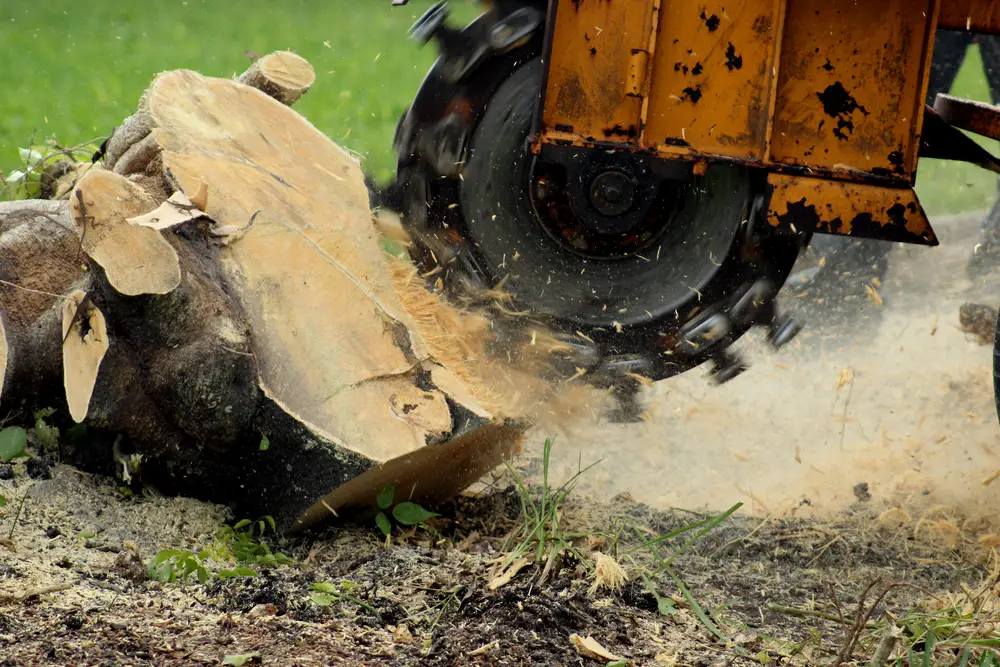
Stump grinding has come a long way from its roots in land clearing. It’s a crucial move toward more eco-conscious land care. If you do it right, stump grinding reduces waste, increases soil health, and keeps landowners green. Grounding stumps into wood chips breathes new vitality into the tree bits. Your grinding chips and sawdust shouldn’t have to go to a landfill. Instead, they can be utilized in a number of beneficial ways. There’s a lot you can do with stump millings, but using them as mulch is one of the most popular. Wood chip mulch retains water in the soil, suppresses weed growth, and nourishes the soil as it decomposes. This means less demand for chemical fertilizers, which is safer for the soil and the plants that thrive there. If you don’t want the mulch for yourself, many local organizations will gather and recycle it so it still gets good use.
- Recycle the wood chips into mulch around garden beds or trees.
- Mix sawdust into compost piles to add carbon
- Use chips for garden paths or playground surfacing
- Spread chips as a decorative cover for flower beds
- Donate extra chips to community gardens or parks
- Add sawdust to worm bins for composting
- Use chips as bedding for animals if untreated
Composting stump detritus is yet another savvy step. Wood chips and sawdust, when incorporated into a compost pile, eventually rot down. They contribute carbon, which offsets the “greens” such as grass clippings and food scraps. It mixes up to create compost that nourishes soil and feeds plants. In some areas and communities, compost made from local tree waste is utilized in parks, farms, or gardens at home. This decreases the need for synthetic soil boosters. Good composting helps keep the air cleaner by keeping waste out of landfills, where it would create methane as it rots.
A holistic approach means treating stump grinding as only one piece of a larger puzzle. If stump grinding is part of sustainable blueprints, grinding machines can use biodegradable oils and fuels to reduce impact on soil and surrounding water. Precision grinding leaves the soil around the stump rock steady, so there’s less damage to remaining plants and roots. Combining stump grinding with eco-friendly lawns clears up hiding nooks for insects and fungi, helping the lawns remain healthy. Stump grinding dovetails with other green approaches like planting native plants, intelligent watering, and minimal chemical use.
Nurturing land like this, it turns out, is a good fit for all kinds of locations: huge acreage, tiny lawns, urban parks, or open country. All along the spectrum, from recycling shredded wood to maintaining healthy soils, stump grinding becomes part of a more natural, sustainable rhythm of land management.
Professional services versus DIY approaches
Choosing between hiring a professional stump grinding service and taking a do-it-yourself (DIY) approach can shape the environmental outcomes of land clearing. Each has its trade-offs, particularly when you consider green, price, and safety.
Professional services versus DIY’s. When you hire a professional service, you get workers who know the job inside out. They typically employ state-of-the-art stump grinders that operate with low emissions and more efficient fuel. Many companies go out of their way now to recycle wood chips and grindings, so there’s less waste and a smaller carbon footprint. These workers chew up big or deep stumps like they’re nothing, using heavy machines you likely can’t rent at your neighborhood store. The work is typically completed within an hour or two, which reduces machine run time and fuel consumption. This rapid return isn’t just great for the soil, but for the atmosphere and habitat around it. Professional crews know how to prevent damaging nearby plants and soil, so the local ecosystem remains healthier.
DIY has its own allure, primarily to those seeking to cut expenses or only needing to clear light or easy stumps. Renting a small grinder or hand tools is cheaper than hiring a service, especially if you have some of the gear already. These approaches are slow and hard on the system. A single stump can take hours or days to clear when you’re going it alone. There’s a greater risk of injury—grinders have sharp blades and should be handled carefully, and you need the proper safety equipment. If you’re not trained, it’s easy to overlook something, such as leaving roots or not raking the debris properly. Other times, DIY debris ends up in landfills rather than getting recycled. That contributes to the waste issue and can negate the “green” advantage of doing it yourself.
Professional services will almost always cost a bit more, with fees for labor and machine time usually, but you’re paying for speed, safety, and the expertise to get difficult tasks done. For big, deep, or really tricky stumps, that additional expense can save you a lot of time and reduce your chances of injury. DIY is better for small projects or tight budgets, but it’s not necessarily the best option if you’re trying to stay as eco-friendly on your land as possible.
To pick the right approach for your eco-friendly goals, use this checklist:
- Is your stump large, deep, or tough to reach?
- Can you rent or borrow low-emission equipment?
- Do you have a plan for recycling wood debris?
- Are you trained to use grinding tools safely?
- How much time and physical effort can you give?
- Will your removal method protect nearby plants and soil?
- Do the costs fit your budget and timeline?
Challenges and future opportunities
While stump grinders are crucial to sustainable land clearing, a few obstacles stand in the way of broader adoption of greener solutions. Solar and electric stump grinders are not widely available. These challenges present opportunities going forward. That makes it hard for small landowners and even some businesses to convert. In a lot of markets, these machines aren’t stocked as well as traditional types. It’s improved in urban regions but is significantly lower in rural areas. This gap delays adoption of cleaner machines. Then there’s the cost of charging stations or solar panels, which can accumulate, particularly in locations without consistent power or intense sun.
Grinder innovation is pushing the needle. Newer machines are more fuel efficient and emit less fumes. Others use biodegradable lubricants and fuels, reducing damage to the soil and water. Tracked stump grinders make work safer and easier on uneven terrain. They hold firm on hills or muddy soil, which can have a big impact in areas with wild weather or rocky terrain. There are automated grinders sprouting up, allowing operators to grind from a safe distance and reduce the chance of flying debris or machine kickbacks. There’s still a lot of space for disruption. We need lighter, quieter, energy-smart grinders that work in all seasons, including freezing winters. Enhanced battery life and rapid charging might allow electric grinders to spend more time in the field.
Public awareness is another challenge. A lot of folks still believe old methods, such as stump burning or pulling, are acceptable. They won’t know stump grinding is safer for them and better for the land. Education can drive this change.
Single sentence
Clear information about greener options, like using biodegradable oils or grinding stumps in the fall or winter, can steer homeowners and land managers. Workshops, online guides, and local outreach can demonstrate how to plan work for cold months, manage debris, and select the appropriate machine. Such measures may reduce accidents and assist more workers in the transition to sustainable practices.
Looking ahead, the industry is ripe for additional expansion in eco-friendly land clearing. Machine makers are testing new biodegradable parts, like belts and guards, that disintegrate after use. Automated and robotic grinders will soon be doing more of the hard work with less human danger. Anticipate intelligent machines that identify stumps, operate autonomously, and are more energy efficient. As tech advances, so too will the appetite for secure, low-impact methods of clearing land, regardless of the season or soil conditions. Whether these changes catch on or not, they can help fulfill local and global demands for greener land care.